
In today’s globalized construction landscape, delivering projects to international standards is no longer a differentiating advantage — it is a prerequisite for credibility. International-standard interior fit-out extends far beyond skilled craftsmanship. It is the product of an exceptionally rigorous operational framework in which every potential risk is anticipated, systematically managed, and eliminated.
1. Technical & Regulatory Requirements: The Rules of Global Construction
Unlike domestic markets where regulatory interpretation can be flexible, international projects operate within strictly enforced legal frameworks:
- Building Codes: Each jurisdiction maintains its own comprehensive construction regulations governing structural integrity, means of egress, and public safety — from the Americans with Disabilities Act (ADA) in the U.S. to stringent fire safety mandates across the EU.
- Occupational Health & Safety: International job sites enforce rigorous site safety protocols, including mandatory trade certifications, personal protective equipment requirements, and comprehensive project insurance.
- Risk Management: Every scope item must be covered by public liability and project insurance, ensuring the owner’s interests are fully protected at every stage.

International-standard interior fit-out
2. Material Standards: ‘Clean’ and ‘Durable’ Are Non-Negotiable
While domestic projects may prioritize cost, international markets place health and environmental performance at the top of the specification hierarchy:
- Material Certification: Every timber product, paint, adhesive, and finish must carry recognized certifications — FSC for responsible forestry, Green Label for indoor air quality, and compliance with low-formaldehyde emission thresholds (E0, E1 classifications).
- Climate Performance: Materials must withstand the specific climatic conditions of the destination market — whether the extreme humidity of Singapore or the intense aridity of the Middle East — without dimensional instability.
- Full Traceability: Contractors are required to document the provenance of every component — down to individual fasteners and electrical cable — through formal material submittals submitted for client and consultant review.
3. Documentation & Handover: Absolute Transparency
The most fundamental difference between domestic and international fit-out lies in documentation standards. In international markets, the project handover package extends far beyond a set of keys:
- Shop Drawings: Fully coordinated, contractor-produced drawings detailing every electrical routing, ducting layout, and service run — enabling any future occupier or maintenance team to operate the building with confidence.
- QA/QC Protocols: Structured Quality Assurance and Quality Control processes at each defined milestone, documented with photography, video evidence, and formal sign-off from all relevant parties.
- Digital Twin: A fully coordinated 3D as-built model of all concealed building systems, supporting seamless post-handover building operations and long-term asset management.
4. Why a Strong Production Ecosystem Is Essential
International fit-out leaves no room for trial and error on site. Contractors seeking to compete in global markets must operate from a robust, integrated manufacturing base:
- Prefabrication: The majority of components are manufactured and finished to completion in the workshop, arriving on site ready for installation only. This approach minimizes on-site waste, noise, and program risk.
- Dry-Fit Verification: Full mock-up assemblies are completed in the factory to verify dimensional accuracy before shipping or transport to site — eliminating costly remediation once the product reaches the project location.
- International Logistics: Packaging, transport, and delivery must be engineered to protect finished goods from moisture ingress and physical damage across long-distance international supply chains.
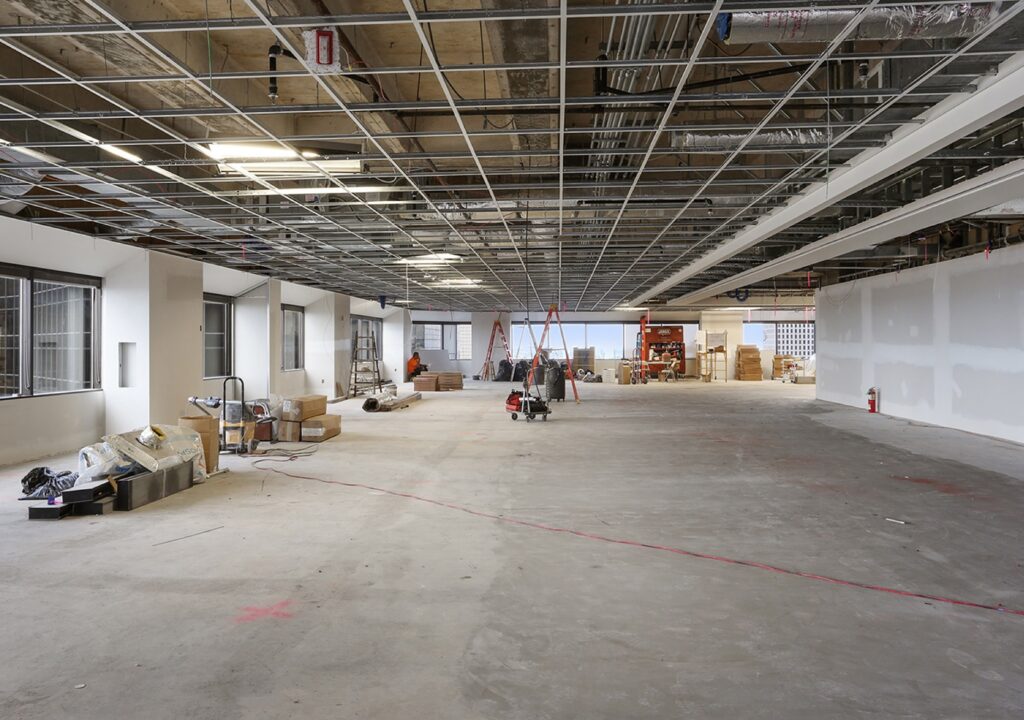
Construction quality control
5. Lessons from Experience: Building a Global Mindset
Sustained success in international fit-out requires adopting a global perspective from the earliest stages of a project:
- Cross-Cultural Communication: Project management teams must be fluent in international technical language and attuned to the working cultures of multinational clients, consultants, and sub-contractors.
- Technology-Driven Adaptability: Each market operates differently. Leveraging BIM coordination platforms and cloud-based program management tools ensures consistent project governance across geographies.
- Unwavering Quality Commitment: Quality must never be traded against program pressure. In international markets, a contractor’s reputation — built project by project — is their most valuable long-term asset.
Related Posts

In an era defined by climate urgency, the concept of a ‘home’ or any high-quality interior environment can no longer be evaluated on comfort and aesthetics alone. A truly exceptional living or working space now demands environmental responsibility as a foundational design principle. Sustainable interior design, realized through the deliberate specification of green interior materials, […]

Earth tones and neutral color palettes have firmly established themselves as the defining aesthetic direction for luxury interior design in 2026. Widely adopted by leading architects and premium fit-out contractors alike, these grounded, nature-inspired schemes create interiors that are simultaneously refined, enduring, and highly versatile. From five-star hospitality to Grade-A commercial and high-end residential, neutral […]

Premium tiles are no longer simply a surface finish. Across hotel, commercial office, retail, and high-end residential developments, tiles have become a defining element of architectural language, shaping spatial experience, reinforcing brand identity, and directly influencing the quality of the user journey. What was once treated as a technical finishing material has evolved into architectural […]
